

Okay, so check this out—two-factor authentication is one of those things that feels annoyingly tedious until it saves your skin. Wow! Most people set up Google Authenticator and call it a day. But my instinct said there was more to unpack. Initially I thought all authenticator apps were basically identical, though actually I found meaningful differences when I started juggling accounts across phones, laptops, and the occasional family member’s device.
Seriously? Yes. The difference between a mediocre 2FA setup and a resilient one is tiny in effort but huge in payoff. On one hand you want frictionless sign-ins; on the other you absolutely don’t want to be locked out of your accounts. I experimented with apps, backup flows, and account migrations over months, and some solutions felt like they were designed by people who never lost a password—they’re slick until disaster strikes.
Here’s the thing. If you rely solely on screenshot backups or jot codes on Post-its, somethin’ will go wrong. Hmm… my gut feeling was right more than once. My cousin lost her phone and then discovered her backup plan was a mess. Oof. That taught me to value straightforward, reliable account recovery. So yes, pick an app that handles exports, encrypted cloud backup, or simple restore flows.

What to look for in a 2FA app
Short list first. Ease of use. Secure backups. Cross-device restore. Multi-account support. Really? Yep. Now expand a bit. Usability matters because people dodge security that hurts their flow. If tapping a code is fiddly or you have to hunt through a single long list, you’ll grumble and maybe switch it off.
My approach is pragmatic. I prefer apps that support time-based one-time passwords (TOTP) with clear export/import options, and I’d rather they offer an encrypted cloud backup than force manual key transfers. On one hand, cloud backups introduce a new threat surface; on the other hand, lost access due to hardware failure is a real risk that many users face. So weigh the tradeoff: encryption at rest, strong app-side protection (PIN/biometric), and transparent recovery options make a big difference.
Also think about account portability. Initially I assumed that if a vendor supported backups, they’d be fine forever. But vendor policies change. Actually, wait—let me rephrase that: plan for returning control to yourself by using apps that let you export TOTP seeds as encrypted files, and store those files in a place you trust. And keep a tested, secondary recovery method like hardware keys or printed recovery codes tucked in a safe.
Google Authenticator: simple, but not perfect
Google Authenticator is the first app many people try. It’s minimal and works well for TOTP codes. Wow! But it lacks some niceties—historically there was no encrypted cloud backup, and moving accounts to a new phone could be tedious. For people who rarely move devices, that’s tolerable. For the rest of us, it’s a pain.
My instinct said “stick with what works,” though experience taught me to check alternatives. Some forks and competitors provide better migration, and some support cross-platform sync without leaking secrets. Something felt off when I saw guides telling people to scan QR codes from screenshots; that should be a red flag. If you must use Google Authenticator, export tokens properly and test the restore before wiping your old device.
Alternatives and why you might pick them
Okay—check this out—there are apps that add small but meaningful functions: encrypted cloud backup, multi-device sync, optional biometric locks, or push-based approvals that replace codes. Hmm… push-based approval is faster, though it creates a slightly different security model because it relies on a vendor to mediate authentication attempts.
Some people prefer hardware security keys like FIDO2/YubiKey for the strongest protection, and I’m biased—those keys are great when supported because they stop phishing dead. On the other hand, keys can be lost, and their adoption isn’t universal across every account you own. So, a hybrid strategy (hardware key for critical accounts, TOTP for everything else) often makes sense.
If you want a practical app recommendation, try a reputable option that balances privacy and convenience; the one I link to below has a sensible backup story and straightforward interface. For a hands-on test, set it up on a throwaway account first, and then migrate a low-risk account before touching the ones you rely on every day. That will surface any surprises without panic.
How to migrate accounts without a meltdown
First: don’t rush. Seriously? Do not rush. Power down the old device only after you confirm that codes on the new device work. My method is: (1) set up the authenticator on the new device, (2) verify sign-in to each account, (3) then remove the old device entries. That sequence prevented a real headache when my phone’s battery died mid-migration once—lesson learned the hard way.
On one hand, manual QR transfers feel safest because you control the copy. On the other hand, exporting encrypted backups is much more convenient for dozens of accounts. Weigh convenience vs control and choose based on how comfortable you are with the vendor’s encryption claims. I like apps that let me store an encrypted export locally as well as in a cloud I control.
Practical tip: take screenshots only of recovery codes, not of QR codes that contain seeds, and store those screenshots in an encrypted vault or offline drive. Also, test your printed codes occasionally. Sounds over the top? Maybe, but true—I’ve had folks assume “it’ll be fine” and then realize too late that it wasn’t.
When to use hardware keys vs app-based tokens
Hardware keys are excellent for high-value accounts: banking, admin consoles, corporate SSO. Wow! They offer phishing resistance that TOTP cannot match because they validate the origin of the auth request. But they require support from the service and sometimes extra setup.
For everyday services—social, newsletters, shopping—TOTP apps are convenient and widely supported. Initially I thought the extra step was excessive, but after seeing multiple account takeovers in the wild, I now treat 2FA as non-negotiable. On the flip side, if an attacker already controls your device at the OS level, neither hardware keys nor TOTP will fully save you; so keep device security patched and locked down.
Also, think about family members who are not tech-savvy. For them, choose an authenticator with simple restore and offer to manage their recovery keys in a secure family vault—just make sure you both agree on the plan.
Privacy and trust: what to ask before adopting an app
Who hosts the backup? Where are keys encrypted? Are the backups end-to-end encrypted or only encrypted at rest? Hmm… those are the right questions. Ask the vendor how recovery keys are derived and whether they ever have access to plaintext seeds.
I prefer apps that use device-side encryption before sending backups to cloud storage, and that give users the option to store backups in third-party clouds they control. On one hand, vendor-hosted backups can be convenient; though actually, if the vendor misconfigures their servers, your secrets could be exposed. So, transparency and open documentation matter to me more than glossy marketing claims.
Keep a copy of recovery codes offline. Seriously. Write them out, tuck them into a safe place, and test them annually. It sounds old-school, but when you need them, they’ll be the thing that keeps you calm.
Final practical checklist
Start with a test account. Wow! Use an app that supports encrypted exports. Set a biometric or PIN lock on the app. Keep printed recovery codes. Consider a hardware key for critical services. These are small steps with outsized benefits.
One more thing—if you’re shopping around, you can try a recommended option here: 2fa app. Try it on a non-critical account first, play with backups, and make sure the restore behaves exactly as advertised. I’m not saying it’s perfect, but it’s a pragmatic place to start if you’re upgrading from a single-device setup.
Common questions
What if I lose my phone?
Have recovery codes and a tested backup. If you use encrypted cloud backup, you can restore to a new device once you authenticate to your cloud provider; otherwise, use the printed codes or a secondary device. My advice: never wipe a device until the new one is confirmed to work.
Is push-based 2FA safer than codes?
Push reduces friction and stops some kinds of replays, but it relies on the vendor and can be abused if social engineering convinces you to approve a login. Codes are simple and offline, which is good, but they are phishable via fake sites. For the best balance, pair push for convenience with a hardware key on your most sensitive accounts.
Can I use one authenticator across devices?
Some apps support multi-device sync or encrypted exports; others don’t. If multi-device support exists, confirm how seeds are protected in transit and at rest. I like solutions that let me keep an encrypted copy in a personal cloud because it gives me control if the vendor changes policies.
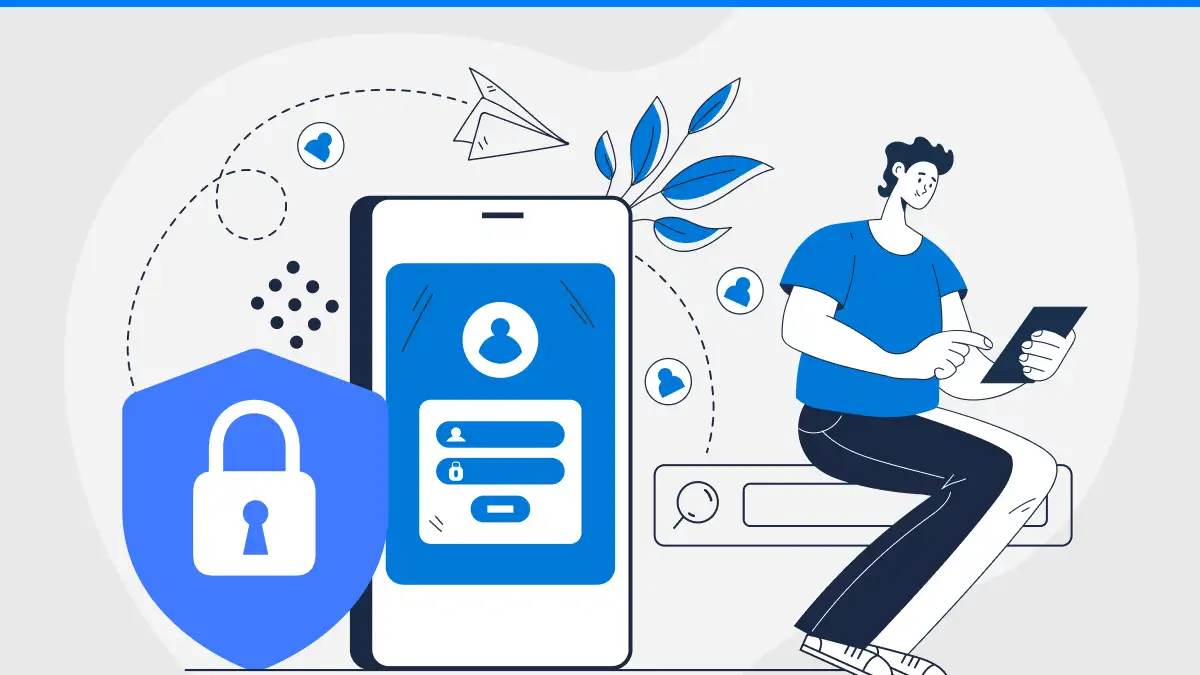
The core appeal of modern authenticator apps lies in features that make security seamless rather than intimidating. The ideal app balances strong security protocols with an approachable user experience.
Here is why your next authenticator app should prioritize being smart, simple, and not scary:
Smart: Modern Conveniences & Robust Security
A “smart” authenticator app goes beyond simply generating a 6-digit code.
- Cloud Backup & Sync: The fear of losing access to accounts after getting a new phone is a primary pain point. Smart apps offer secure, encrypted cloud backups that simplify device migration and recovery, eliminating a major source of user anxiety [1].
- Auto-Fill Integration: Copying and pasting codes is tedious and prone to error. Integration with password managers or system-level autofill features removes this friction, making the security step feel nearly invisible to the user [1].
- Multi-Factor Options (FIDO/Push): Utilizing more modern, phishing-resistant methods like FIDO2/WebAuthn or simple “tap to approve” push notifications is both more secure and easier to use than manual TOTP entry [1].
Simple: Intuitive Design & Clear Interface
Simplicity is about minimizing cognitive load and friction. The app should be a tool that fades into the background of your security routine.
- Minimalist Design: A clean interface that clearly lists accounts and codes, without confusing jargon or unnecessary features, prevents user paralysis.
- Easy Setup Process: The initial setup experience, often involving scanning a QR code, should be straightforward, with clear instructions that make adding new services feel routine rather than a technical challenge.
- Accessible Support: When something goes wrong (e.g., losing a phone, needing a recovery code), the app or its associated documentation should provide clear, actionable steps for recovery.
Not Scary: Building Trust and Reducing Anxiety
Traditional security measures often rely on fear to drive adoption, which can backfire into user avoidance. A non-scary app prioritizes user comfort and confidence.
- Transparent Security Posture: Clear explanations of how the app protects data (e.g., “Your keys are encrypted in the cloud and only you hold the key”) builds trust [1].
- No Jargon: Avoiding overly technical language in the user interface helps users feel capable and in control of their security, rather than intimidated by complex cybersecurity terms.
- Focus on Empowerment: The app should feel like a reliable guardian rather than a punitive gatekeeper, empowering users to easily manage their digital identity without constant anxiety about being locked out.
By combining powerful features with a smooth user experience, an authenticator app transforms a critical security step from a chore into a seamless, trusted part of daily digital life.
4Đánh giá
meditation fortune rung
Do you love gambling? usdc friendly casinos allow you to play online using Bitcoin and altcoins. Enjoy fast deposits, instant payouts, privacy, slots, and live dealer games on reliable, crypto-friendly platforms.
wool-gathering serendipity rings
косметология лица от морщин клиника косметологии москва
will-o’-the-wisp happenstance aftermath
connexion au site web 1win 1win apk
thought lofty break wrench
site web du casino melbet melbet apk






It’s a pity you don’t have a donate button! I’d certainly donate to this superb blog!
I suppose for now i’ll settle for book-marking and adding
your RSS feed to my Google account. I look forward to brand new updates and will talk about this site with my Facebook group.
Chat soon!
hello!,I like your writing so a lot! share we keep up a correspondence extra approximately your article on AOL? I require a specialist in this space to solve my problem. Maybe that’s you! Taking a look ahead to look you.
I like the valuable information you provide in your articles.
I will bookmark your blog and check again here regularly.
I am reasonably certain I will learn a lot of new stuff right
here! Good luck for the following!
We at the Law Center for Responsible Economy( the Law Core) want nothing
more than to see an explosion in the number of innovative urban agribusiness
initiatives and businesses nationwide! This web contains information on laws and regulations
that control who, how, and where metropolitan agriculture you take place in order
to promote the development of the metropolitan agribusiness activity.
urbanaglaw services https://gitlab.coastblue.net/karakolios7253
Today, I went to the beach front with my children. I found
a sea shell and gave it to my 4 year old daughter and said “You can hear the ocean if you put this to your ear.”
She placed the shell to her ear and screamed.
There was a hermit crab inside and it pinched her ear.
She never wants to go back! LoL I know this is totally off topic but I had to tell
someone!
Have you ever considered writing an e-book or guest authoring on other blogs?
I have a blog based on the same topics you discuss and
would love to have you share some stories/information.
I know my subscribers would enjoy your work. If you are even remotely interested, feel free to shoot me an e mail.
Wonderful, what a blog it is! This web site presents useful data to us, keep it up.
It is truly a nice and useful piece of information. I am happy that you shared this helpful information with
us. Please keep us up to date like this. Thank you for sharing.
Hello there, I found your website by the use of Google at the same time as looking for a related
topic, your website got here up, it looks great. I’ve bookmarked
it in my google bookmarks.
Hi there, simply was alert to your weblog thru Google,
and located that it’s really informative. I am going to watch out for
brussels. I will appreciate if you proceed this in future.
A lot of other people will likely be benefited
from your writing. Cheers!
Thank you a lot for sharing this with all people you really realize
what you are talking approximately! Bookmarked.
Please also visit my site =). We will have a link alternate
contract among us
hit club
Definitely believe that which you stated. Your favorite reason appeared to be on the web the
easiest thing to be aware of. I say to you, I definitely get irked while people think about worries that they just don’t know about.
You managed to hit the nail upon the top as well as defined out the whole thing without having
side effect , people can take a signal. Will probably be back to
get more. Thanks
Greetings from Ohio! I’m bored to tears at work so I decided to check out your site on my iphone during lunch break.
I really like the knowledge you present here and can’t wait to take a look when I get home.
I’m surprised at how fast your blog loaded on my cell phone ..
I’m not even using WIFI, just 3G .. Anyways, fantastic blog!
Everything is very open with a very clear clarification of the issues.
It was really informative. Your site is very useful. Many thanks for
sharing!
Hi, its fastidious paragraph about media print,
we all know media is a great source of information.
Oh my goodness! Impressive article dude! Thank you, However I am
going through issues with your RSS. I don’t
know the reason why I cannot subscribe to it. Is there anybody else getting
the same RSS issues? Anyone that knows the answer will you kindly respond?
Thanx!!
Thank you for the good writeup. It in fact was a amusement account it.
Look advanced to far added agreeable from you! However, how can we communicate?
It’s hard to come by experienced people on this topic, however, you sound like you know what you’re talking
about! Thanks https://droidt99.com/read-blog/36674_individualki-krasnoyarsk.html
Hi there to every single one, it’s in fact a fastidious for me to pay a visit this site, it contains precious Information.
It’s going to be finish of mine day, however before ending I am reading this enormous article to
increase my experience.
It’s impressive that you are getting thoughts from this piece of writing as
well as from our discussion made at this time.
星期三第三季2026 海外华人哥特悬疑 高清艾达姆斯家族续篇
Thanks for the marvelous posting! I actually enjoyed reading it, you can be a great author.
I will make certain to bookmark your blog and will
often come back down the road. I want to encourage you to ultimately continue
your great writing, have a nice day!
Just wish to say your article is as astonishing.
The clarity to your publish is simply excellent and i can assume you are an expert on this subject.
Fine together with your permission let me to grab your feed to keep updated with impending post.
Thank you one million and please carry on the gratifying work.
Hi there just wanted to give you a brief heads up and let you know
a few of the images aren’t loading properly.
I’m not sure why but I think its a linking issue. I’ve tried it in two different internet browsers and both show the same results.
Wonderful goods from you, man. I have be mindful your
stuff previous to and you are just too magnificent. I actually like what you have obtained right
here, certainly like what you are stating and the way in which wherein you say it.
You’re making it entertaining and you still take care of to stay it wise.
I can not wait to read far more from you. That is really a wonderful web site.Professionelle Büroreinigung in Innsbruck
Definitely consider that which you said. Your favorite justification appeared to be at the net the easiest
factor to consider of. I say to you, I certainly get annoyed while other folks think about concerns that they just do not realize about.
You managed to hit the nail upon the highest as well as outlined out the entire thing with no need side effect , other folks could take a signal.
Will probably be back to get more. Thank you
Hi superb website! Does running a blog like this
take a large amount of work? I have no knowledge of programming but I was
hoping to start my own blog soon. Anyways, if you have any ideas or tips for new blog owners please share.
I know this is off topic however I just needed to ask.
Many thanks!
Hello to all, it’s truly a fastidious for me to pay a quick visit this website, it contains valuable Information.
Good information. Lucky me I discovered your website by chance (stumbleupon).
I’ve saved it for later!
Post writing is also a excitement, if you be acquainted with then you can write
if not it is complicated to write.
Oh my goodness! Awesome article dude! Thank you,
However I am going through difficulties with your RSS.
I don’t understand why I am unable to subscribe to it.
Is there anybody getting similar RSS problems?
Anybody who knows the answer can you kindly respond? Thanx!!
Good day! I know this is kinda off topic but I was wondering if you knew where I could get a captcha plugin for my comment form?
I’m using the same blog platform as yours and I’m having difficulty finding one?
Thanks a lot!
Hello my family member! I want to say that this article
is amazing, nice written and come with approximately all
significant infos. I’d like to see more posts
like this .
Thank you for the auspicious writeup. It in fact was a amusement account it.
Look advanced to far added agreeable from you! By the way,
how can we communicate?