

Okay, so check this out—Solana moves fast. Whoa! The network churns through thousands of transactions per second, and that first impression can be dizzying. My instinct said “keep it simple,” but then I dug deeper and realized the nuance matters, a lot. Initially I thought a block explorer was just a lookup tool, but then I saw how explorers double as research instruments and debugging consoles for devs and traders. I’m biased, but if you spend time on-chain you learn to love a good explorer (and also to hate noisy dashboards that hide details).
Quick gut check: when you click a transaction on Solana you want clarity. Really? Yes. You want to know who signed, what program ran, what tokens moved, and whether any inner instructions failed. Hmm… Somethin’ about raw logs tells you more than a pretty chart ever will. On one hand, explorers are glorified search bars. On the other hand, the best ones layer in analytics and let you pivot between macro trends and a single signature’s anatomy.
Let me be frank—reading txs on Solana requires three mental moves. First, identify the cluster and slot. Second, parse the signatures and program IDs. Third, follow the token accounts to see actual asset movement. Actually, wait—let me rephrase that: start with cluster, then confirm status, then dive into inner instructions if the outcome is surprising. On some transactions the top-level instruction is trivial, though actually the interesting stuff happens inside CPI calls (cross-program invocations). That was a revelation for me when I first saw Serum orders routed through several programs.
Here’s what bugs me about some explorers: they obfuscate inner instructions behind layers of icons and color-coding that mean nothing without context. I once chased a phantom balance discrepancy for an hour because the UI hid rent-exempt transfers in a way that looked optional. Lesson learned—always check raw logs when balances don’t add up. Oh, and by the way, memos exist. People forget memos. They matter in real dispute resolution sometimes. Also, yes, there are weird edgecases with partial refunds and failed CPI cleanups…
Practical steps to read a Solana transaction (and why each step matters)
Start with the signature. Trace the signature to the final status and confirm which block/slot recorded it. Then look at the fee payer—fees on Solana are tiny but revealing. They tell you which wallet initiated the action and whether a separate fee-payer service was used. Next, scan the “Instructions” section and expand any inner instructions. These often reveal token transfers that don’t show up as native SOL movements. If the explorer supports it, open the transaction logs and search for “Program log:” lines. Those logs narrate what the program actually executed. Initially I thought human-readable labels were enough, but logs are where you catch the exceptions and the debug prints that programmers left in on purpose.
Token flows are next. Follow the token account addresses, not wallet addresses alone. Solana uses associated token accounts, so a wallet might have multiple accounts for the same mint. On-chain analytics often pulls these together, though sometimes you need to manually map them. Also, watch for temporary accounts used by programs. Some exchanges or bridges create throwaway accounts to stage assets; if you don’t account for those, your balance tracing gets mismatched. I’m not 100% sure every explorer surfaces those clearly—it’s inconsistent across tools.
Look up program IDs and verify authenticity. Programs like Serum, Raydium, or a custom bridge have known IDs; impersonation is rare but possible in devnets or test deployments. If a transaction hits an unexpected program, pause. On one occasion my instinct said “this smells phishy” and it turned out to be a third-party router that siphoned liquidity before the main instruction completed. Yeah, that part bugs me. Oh, and signature reuse—watch for it. Double-signed transactions or replay attempts can show odd behaviors.
Now for analytics. Aggregate metrics matter when you’re doing research or monitoring. Throughput, transaction composition (how many are token transfers vs. swaps vs. program deployments), and average compute units consumed—these tell a story. High compute per tx spikes often correlate with complex contract activity or failed programs that burn cycles. If you’re operating a dApp, keep an eye on compute spikes; they eat into performance and user experience, and they can signal inefficient code or abusive patterns.
One tip from experience: set up a watchlist for program IDs and key wallets you care about. Many explorers let you bookmark or follow them. When you follow a program, you can see recent call patterns and major holders. This helps detect large moves or migration events early. You can also export CSVs for deeper offline analysis, which I do when prepping reports. Yep, I’m old-school enough to keep spreadsheets—very very helpful when reconciling airdrops or fund flows.
Where explorers differ (and why I recommend trying a couple)
Explorers vary in UX, depth, and performance. Some present nice high-level charts but hide inner instruction granularity. Others are raw and log-centric. Your choice depends on your goal. If you’re auditing a contract you need granular logs; if you’re tracking token metrics you want charting and holder distributions. Personally I toggle between fast lookup mode and deep-dive mode. Fast mode answers “did this succeed?” Deep-dive mode answers “how and why?”
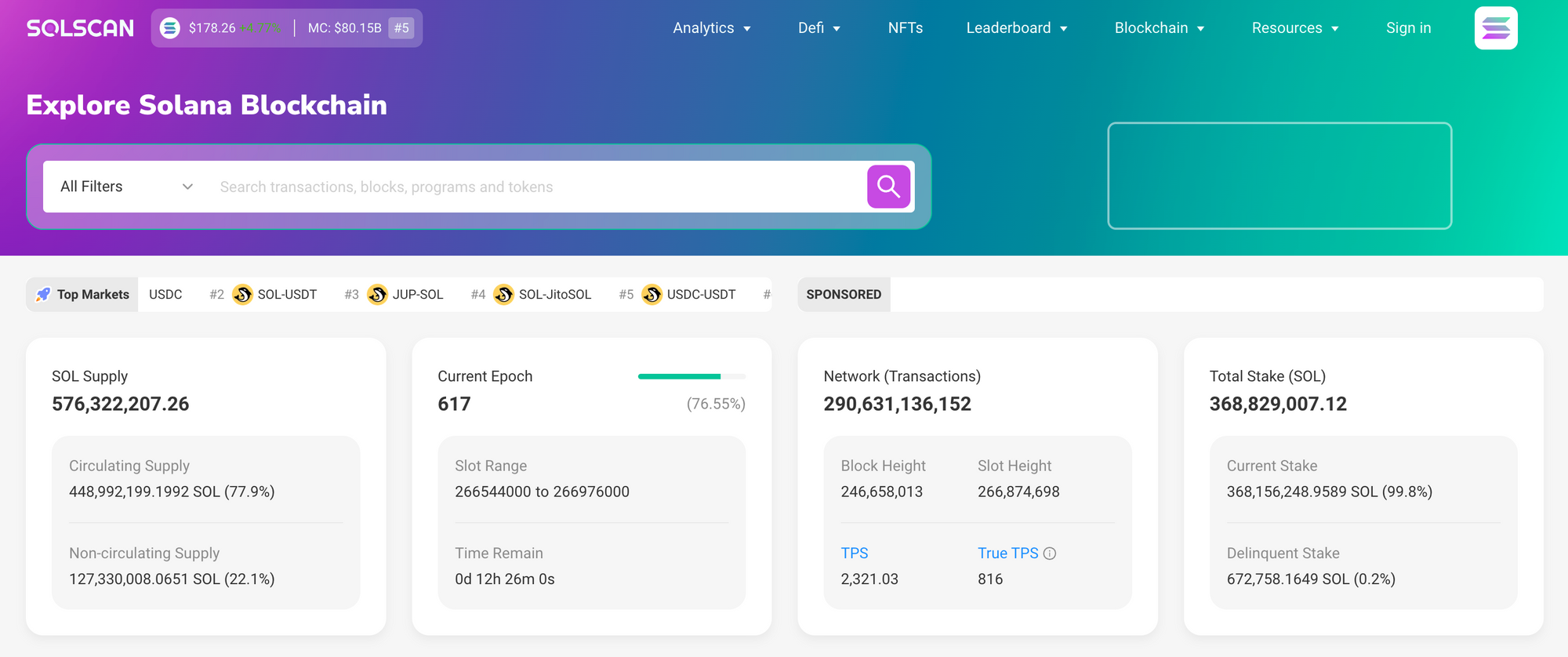
If you want a hands-on, practical tool that balances both worlds try solscan for a solid mix of clarity and features. It surfaces inner instructions cleanly and gives you quick access to token holder snapshots and program analytics. The link is here: solscan. Seriously, give it a whirl—it’s saved me hours of chasing misattributed transfers.
Quick FAQ for everyday Solana lookups
How do I confirm a transaction actually moved tokens and not just a program event?
Check token account balances before and after the slot or follow the “Token Transfers” section. Expand inner instructions and read logs for SPL token transfer events. If you see a transfer to a temporary ATA, follow where that ATA later migrates. Also watch for burn or close account instructions which can reduce total supply on that account.
What does “compute units exceeded” mean and what should I do?
It means the transaction hit the program’s permitted compute budget and failed or was truncated. For devs, optimize code paths or increase the compute budget via payer instructions. For users, retry later or from a different route—some aggregators split complex flows into separate transactions to avoid this.
Can I trace a swap across multiple DEXs?
Yes, by following inner CPI calls and program IDs for each DEX involved. The logs will show CPI sequences, and token account flows reveal the actual asset path. It can be messy, but it’s doable with patience and the right explorer features.
To wrap up this little ride—okay, not a formal wrap up but a parting nudge—explorers are your window into Solana’s on-chain truth. They won’t solve governance debates or fix buggy programs, but they give you evidence. On one hand the chain is transparent; on the other, interpretation takes work. I started with a simple need to confirm tx status and ended up using explorers as research instruments and incident response tools. If you’re getting serious, bookmark program IDs, export logs, and learn to read inner instructions like they’re the punchline of a long joke. You’ll catch quirks earlier, and you’ll sleep better at night (well, maybe…).